DUCK Lab logo DUCK Lab

DUCK Lab

DataWhat we learn from
UncertaintyWhat we don't know
ConstraintsWhat we want to comply with
KnowledgeWhat we want to build on

The DUCK Lab is a neurosymbolic AI research group at Imperial College London. Our goal is to build systems that don't compromise between being powerful and being safe: we want them to not only learn from data but also reason over it, acknowledge what they don't know, respect the rules of the world, and draw on structured knowledge.

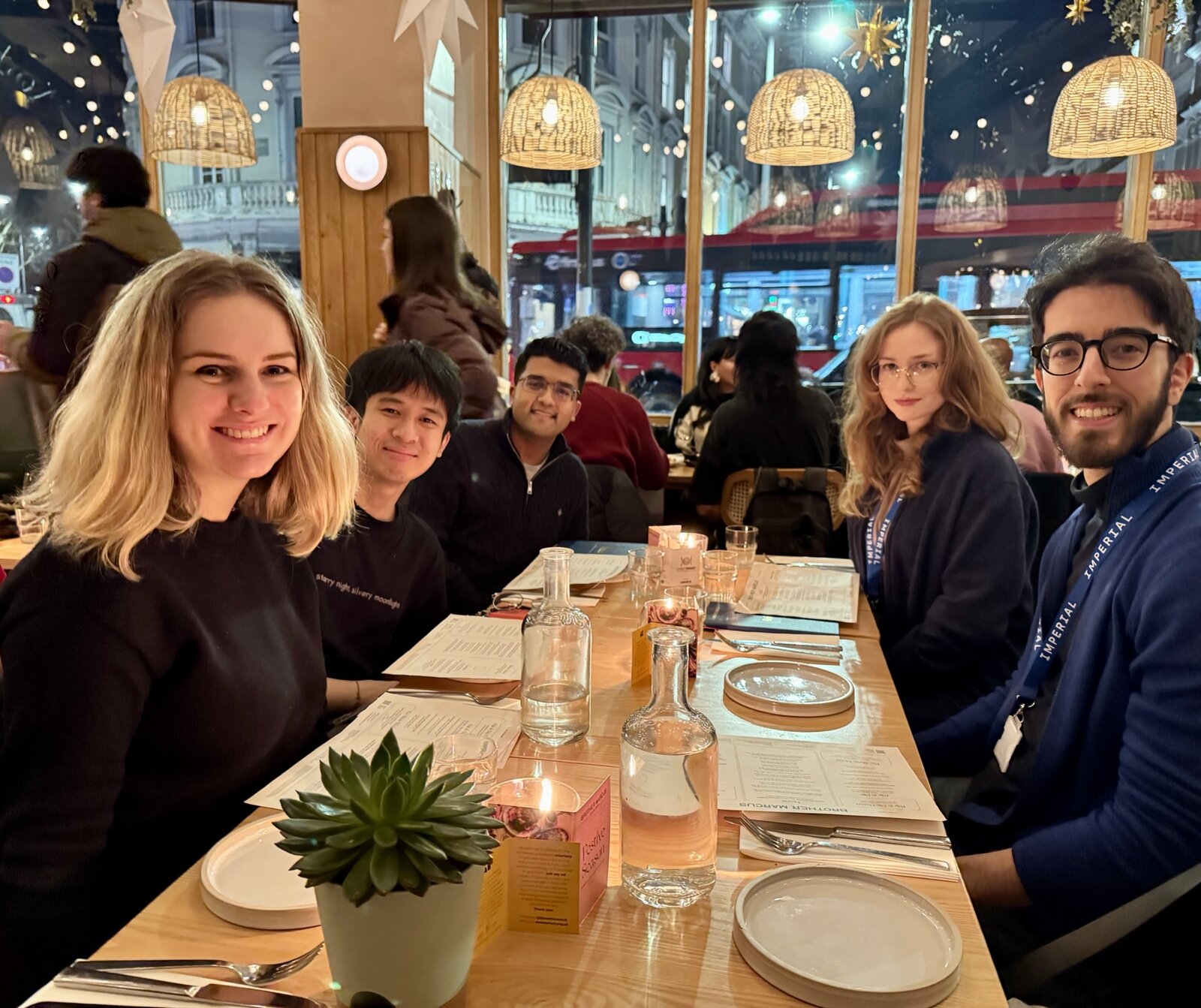
DUCK Lab group photo

🦆 Interested in joining the lab? Contact Eleonora at e [DOT] giunchiglia [AT] imperial [DOT] ac [DOT] uk.

Recent news

Sep 2026

Invited talk at NESYRE 2026 in Berlin

Eleonora will give an invited talk at NESYRE 2026 — Neuro-symbolic AI, Mathematical Reasoning and Agents — at the Weierstrass Institute in Berlin (14–17 September). The speaker line-up looks amazing! ✨

Aug 2026

Tutorial at UAI 2026 in Amsterdam

Mihaela and Eleonora will give a tutorial at UAI 2026 in Amsterdam (17–21 August): Beyond Soft Penalties: Hard Constraints for Neural Networks with Continuous Outputs — how to enforce hard constraints on neural networks with continuous outputs.

Aug 2026

Invited talk at TPM 2026 in Amsterdam

Eleonora will give an invited talk at TPM 2026 — the 9th Workshop on Tractable Probabilistic Modeling — in Amsterdam on 21 August, co-located with UAI 2026. Looking forward to meeting this amazing community! ✨

Jul 2026

Two papers accepted at NeSy 2026!

🎉 We had two papers accepted at NeSy 2026, the International Conference on Neural-Symbolic Learning and Reasoning! Huge congratulations to Eleni and Jacob, who led these projects as MSc students. Jacob completed his MSc at Imperial, co-supervised by Eleonora and Francesco Belardinelli, while Eleni completed her MSc at Oxford, co-supervised by Eleonora, Giuseppe De Giacomo, and Antonio Di Stasio. ✨

Jul 2026

Eleonora on the future of AI panel at Imperial

Eleonora took part in a panel on The future of AI: what’s next and what matters?, organised by the Imperial Policy Forum and chaired by Prof Tom Coates. The discussions were amazing!